Predictive Maintenance and Condition Monitoring
Live readings from the machine and reliability analytics from its own history, so the work order is raised before the stop, not after.
Preventive, then predictive
A preventive schedule services a machine on a calendar. A predictive program services it when the machine says so: a bearing running hot, vibration climbing, a compressor's pressure drifting. The calendar does not go away; the readings decide what gets pulled forward and what can wait for the planned shutdown.
Uptario does both halves: condition monitoring that turns a reading into a work order, and reliability analytics that rank every asset from its own failure history.
Condition monitoring over the protocols your plant already speaks
Sensors, gateways, QR and barcode scanners and RFID tags feed run hours, temperatures, vibration and counts into the CMMS over MQTT and OPC UA. Most of those readings already exist in the PLC or the drive; a gateway publishes them without touching the control logic. When a monitored asset drifts outside its healthy range, Uptario raises a condition-based work order and notifies the right technician.
- Native Modbus, OPC UA and Ethernet/IP awareness
- Thresholds per asset with warning and critical levels
- Work orders carry the reading that caused them
- The gateway reads from the control zone; nothing writes back
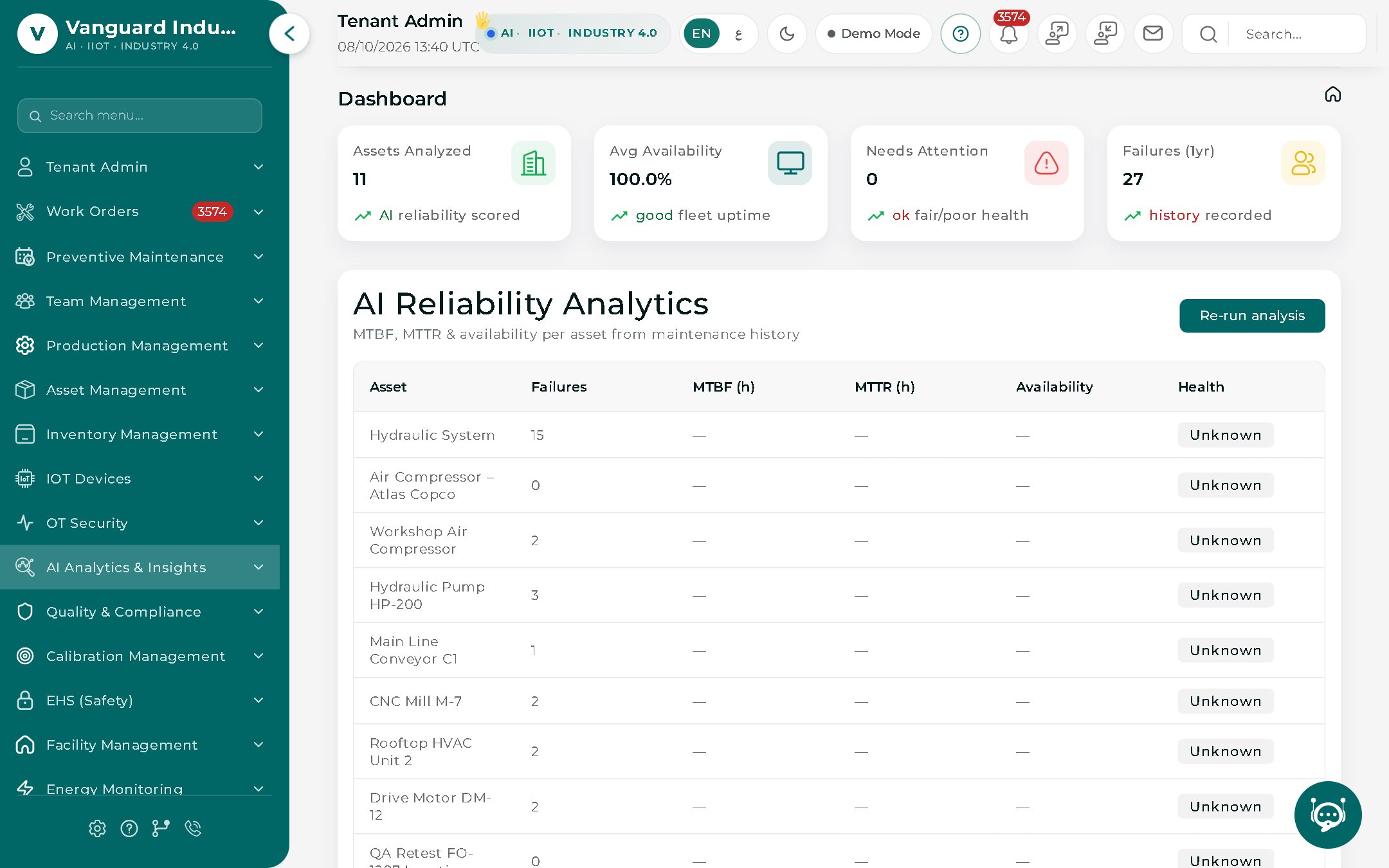
Reliability analytics in the Uptario demo tenant: MTBF, MTTR and availability per asset.
Reliability analytics from the plant's own history
The analytics read each asset's real maintenance history and work out mean time between failures, mean time to repair and availability per asset. Re-run them whenever new history lands. The result is a ranked list of the machines that eat the budget, which is where sensors and spare parts should go first. The maintenance planner then turns schedules into work orders on their due dates, with nobody having to remember.
- Per-asset failure history drives reliability scoring
- One-click re-run as new history lands
- Anomaly detection on sensor data for the monitored assets
- Schedules auto-generate linked work orders
How we roll it out
We start with the assets that stop the line, confirm which readings the PLC already has, set thresholds from a few weeks of real data, and run condition-based work orders alongside the calendar PM for a quarter. Then the numbers decide the next step: unplanned stops, emergency hours and emergency parts before and after. The goal is fewer surprise breakdowns, not a chatbot.
Not on a preventive program yet? Start with the 52-week preventive plan.